
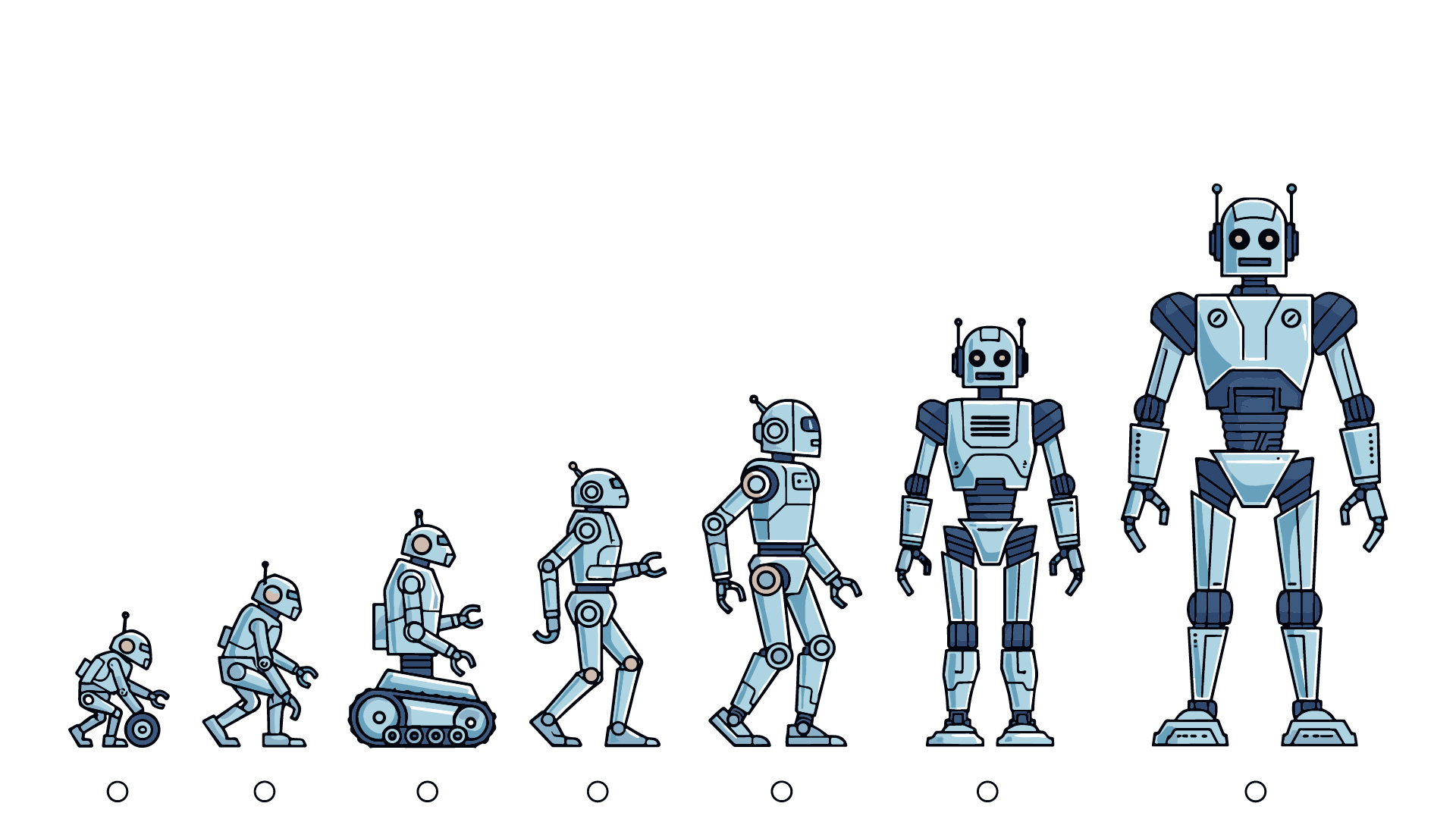
The five stages of market insight maturity — and what separates the organisations catching signals early from those finding out when everyone else does.
Strategic moves rarely arrive as announcements. They arrive as clues — a patent filing, a partnership in a niche journal, a hiring pattern in a new region. The organisations that act on those clues before they become headlines aren't necessarily smarter. They have better infrastructure.
The critical question for any team responsible for tracking markets and competitors isn't whether they're working hard. It's whether the system they're working within is structurally capable of catching what matters — before it becomes obvious to everyone.
"There is a difference between a system that answers when you ask — and a system that already knows, and tells you before you need to ask. That difference is where competitive advantage is built."
The five stages - and what each one actually delivers
Most teams move through a recognisable progression. The stages describe not just the tools in use, but the underlying model — and each one has a risk that's easy to miss from the inside.
Three questions every leader should ask
Wherever your team sits, three questions reveal where intelligence is actually breaking down:
1. Language and source coverage. When a signal appears first in a French trade article or a German regulatory filing — does your system catch it before it becomes an English headline? The most valuable competitive intelligence often surfaces first in local-language sources, weeks before mainstream coverage picks it up.
2. Magnitude, not just monitoring. When your team produces an intelligence brief, can every claim be traced to a current, domain-relevant source — with its significance classified, not just the text extracted? There's a meaningful difference between surfacing a signal and understanding what it means.
3. Delivery, not just production. When your intelligence is ready — does it reach the decision-maker in their workflow at the moment they need it? Or does it wait to be found? Intelligence that isn't acted on has no value, regardless of how good it is.
The shift that actually separates the leaders
Stages 1 through 3 share the same underlying model: intelligence as a research process. You ask, it answers. The tools get faster, the outputs get more polished — but the model stays reactive. You are always catching up to something that already happened.
The organisations genuinely ahead in 2026 have moved to a different model entirely: intelligence as infrastructure. A system that continuously monitors, classifies signals against a domain-trained framework, and delivers them to the right person before they know to ask.
That shift is not about adding another tool. It requires years of domain expertise encoded into the system itself: knowing what a partnership announcement in a specific market historically precedes, what a cluster of R&D signals in an adjacent category means, what three quiet signals across three languages are about to become.
That's not something a RAG pipeline builds in a sprint. It's not something a generic LLM approximates — whose understanding of your market stopped six months ago and was weighted toward English from the start.
Not sure where your organisation sits?
Start with a 15-minute informal conversation with a Reportlinker specialist. We'll help you map your current stage and what the right next step looks like.
Book a 15-minute session →No pitch. No commitment. Just an honest conversation.